Putting the Garden to Bed.
Fall came in this week. What to cut, what to leave standing for the birds and the bees, how to blanket the beds for winter — and why the garlic goes in now.
 By Ana · September 26, 2026 · 12 min read
The equinox came through on Tuesday and nobody told the tomatoes.
They're still out there setting fruit that will never ripen, green and hard as doorknobs, and I let them, because I've finally learned that a garden doesn't end on a date. It winds down one bed at a time, and your job is to follow it down, not to get ahead of it with a rake.
This is the part of the year I used to do badly. I'd wait for the first frost to blacken everything, then go out on a cold Saturday with a grudge and scalp the whole garden to bare dirt, because a clean bed looked like a finished job. It took me years, and one very patient county extension agent, to understand I was hauling off half of what the garden needed to get through the winter. Putting a garden to bed isn't cleaning. It's closer to making up a guest room: take out what's sick, leave what's useful, lay down something warm, and plant the one crop that wants to sleep through the cold.
What Stays Standing
Start with the flowers, because they're the easy argument. Every coneflower head I leave up is a feeder I don't have to fill. The goldfinches work them from now until there's nothing left but the spiky middles, and a cold morning with a finch hanging upside down off a dead black-eyed Susan is worth more to me than a tidy border ever was. Sunflowers, the same. Leave them where they fell over.
The stems are the less obvious gift. A good share of our native bees are solitary, not hive bees, and plenty of them nest in plant stems — hollow ones, or pithy ones that have been cut open so a bee can get at the soft middle. NC State Extension spent a few years actually counting this, and what they found changed how I cut: the stems aren't used their first winter. The bees move in the following spring and summer. So the stem you trim this winter is the nursery you're building for next year.
Their advice, which is now mine: if you trim, do it between the first frost and the last one, and leave a stubble of twelve to twenty-four inches instead of cutting to the ground. Coneflower, bee balm, goldenrod, blazing star, even the hydrangeas and elderberry all showed up in their counts. The leaves under those plants can stay too. A surprising amount of the insect life a garden depends on spends the winter in exactly the litter I used to bag up and put on the curb.
What Comes Out
The vegetable beds live by different rules, and here I am still the woman with the rake. The difference is that now I know why.
A lot of the diseases that wreck a garden — the leaf spots and blights on tomatoes, the mildew that silvers the squash in August — spend the winter in the dead plants they killed. Leave the vines lying there and you've handed next year's outbreak a warm, dry place to wait. So anything that looked sick this season comes out root and all, goes into a bag, and goes to the trash. Not the compost. University of Georgia Extension is plain about this: a pile has to run genuinely hot to kill most of what those plants are carrying, and the average backyard heap, mine included, never gets there.
The healthy plants are a different story. Spent beans, clean lettuce that bolted, the pepper plants that simply got tired — those go to the compost gladly. When a plant was healthy I'll often cut it at the soil line and leave the roots to rot where they are, which feeds the bed and saves me a hole to fill.
Before the first frost I strip the tomatoes of every green one the size of a golf ball or better. Some ripen on the counter in a paper bag. The rest get sliced, dredged, and fried, which is the only correct end for a green tomato and the one meal of the year that tastes exactly like a season closing. What I can't eat goes on the shelf with the rest of what we put up in July.
The Blanket
Bare soil is the thing I try hardest never to leave behind. Winter rain on an open bed carries off the top inch you spent the whole year building, and whatever weeds blow in get a head start on you. So everything gets covered by Thanksgiving. The only question is with what.
Leaves, first. They are the one free thing the season hands you by the truckload. I run them over with the mower to chop them, because whole leaves mat into a slick shingle that sheds water, and shredded ones don't. A few inches of shredded leaves go on the paths, around the perennials, and over any bed that's done for the year. It settles as it goes — four inches in fall is closer to three by spring, and that's the point. It's breaking down into the soil you wanted anyway.
Whatever's left goes into the leaf-mold pile, which is only a ring of wire fencing behind the barn, a lot of leaves, a soaking with the hose, and time. A year or two of time. What comes out the bottom is dark and crumbly and smells like a forest floor, and there's nothing in a bag at the garden center I'd trade it for.
Then the cover crop, for any bed I won't plant again until spring. A cover crop is a crop you grow to keep, not to eat: roots holding the soil, leaves shading out weeds, and in the case of the legumes, nitrogen pulled out of the air and left in the ground for next year. The mix Georgia Extension suggests for home gardens is the one I use — a small grain like cereal rye, wheat, or oats, sown together with crimson clover or Austrian winter peas. The grain comes up fast and shelters the slower clover. Their timing is legumes from mid-September to mid-October, grains from early October to mid-November, so late September is a good week to sow the pair together.
Two cautions from the extension folks that saved me a spring: cereal rye is not ryegrass, and you do not want ryegrass, which hangs on long after you're done with it. And whatever you sow, cut it down a few weeks before you mean to plant, so it has time to break down before the tomatoes go in. I buy my crimson clover from Johnny's, and in April the beds turn a red that stops traffic on our road.
The Test & The Tools
Here is the cheapest good advice in this whole letter: test your soil in the fall.
Your county extension office will run a soil test for a few dollars and tell you, in writing, what your ground is actually short on. Fall is the right time for two reasons. The soil is usually dry enough to dig, and if the test says you need lime, lime works slowly — Georgia Extension says to get it mixed in two to three months before planting. Spread it in November and the whole wet winter does the work for you. Wait until April and you've missed a season. They recommend testing a vegetable garden every year or two, which I didn't do for my first six, and I suspect my peppers could tell.
Then the tools, which is the job I actually look forward to, because it happens indoors with the radio on. Every tool gets knocked clean, then scrubbed with a wire brush until you can see the metal. Pruners and loppers get sharpened. The metal gets a light coat of oil so it doesn't rust over the winter, and the wooden handles get rubbed down with linseed oil and buffed. One rule I learned from somebody who learned it the hard way: rags soaked in linseed oil can heat up and catch fire on their own. Lay them flat outdoors to dry before you throw them out. Don't wad them in a bucket in the shed.
A tool treated like this outlives the gardener, and that's the only kind worth owning. If I could keep just one, it would be the hori-hori, a Japanese digging knife that plants bulbs, splits perennials, cuts twine, and weeds. It's the tool I'll use to plant the garlic. The handle on mine gets a coat of boiled linseed oil every October whether it needs one or not.
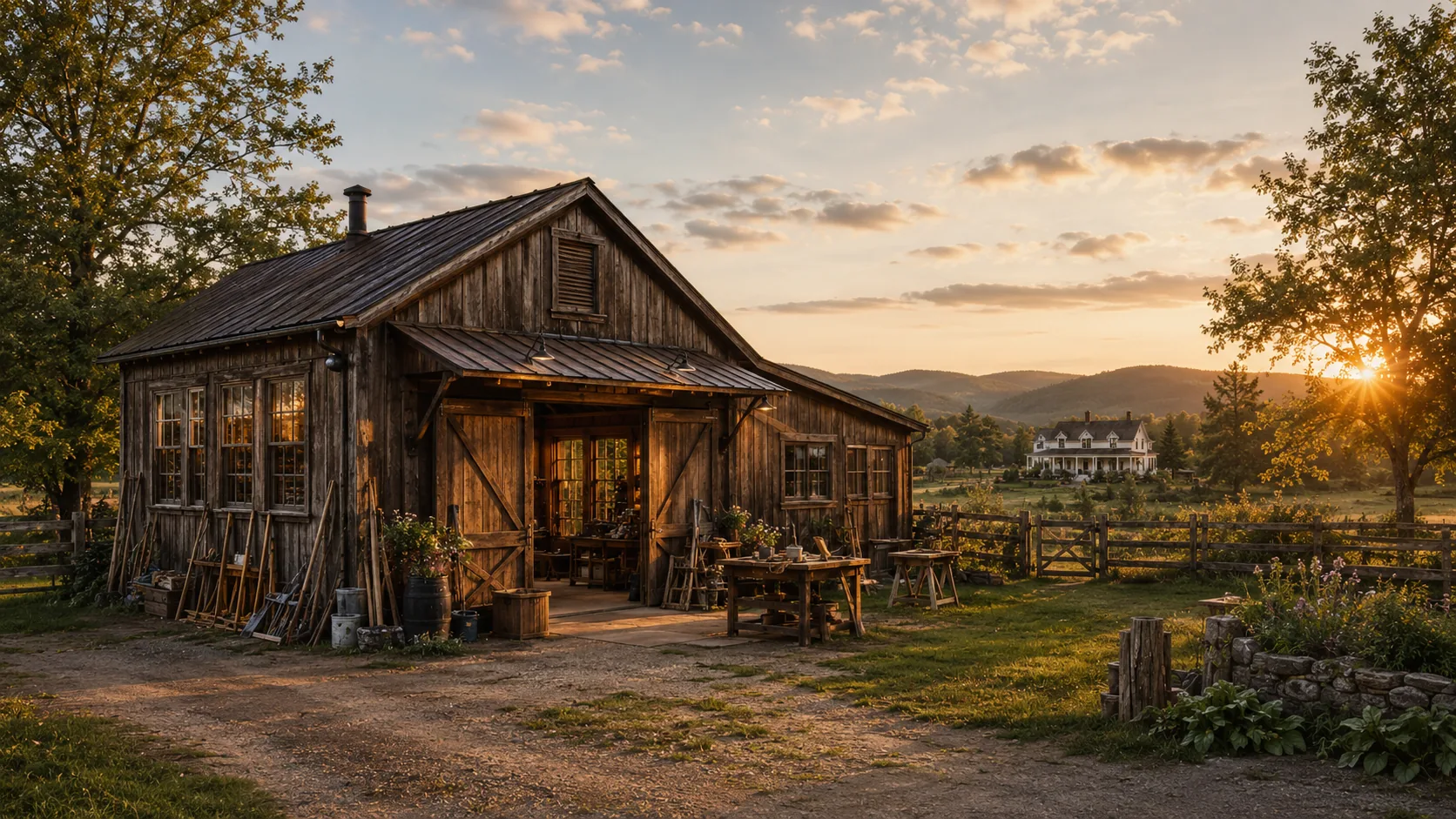
Clean, Sharp, Oiled, Hung.
One evening every fall, everything that dug or cut something this year comes off the wall. It goes back up clean, sharp, and oiled, ready for March before March has a chance to ask.
Baskets, trugs, and garden things from the farm store →“A clean bed looked like a finished job. It took me years to see I was hauling off half of what the garden needed to get through the winter.”
The Garlic
And then, with everything else put away, you plant something.
Garlic is the one crop that turns the garden's calendar around. It goes in now, grows leaves through the short cool days of winter, and makes its bulb in late spring. The reason it has to be fall, as the University of Georgia puts it, is that a garlic plant stops making new leaves as soon as it starts making a bulb. So the bulb you dig in June can only be as big as the plant you managed to grow by late winter. Plant late and you get a small plant, and a small plant gives you a small bulb.
When to plant garlic in the South. Georgia Extension gives late September through November as the window. NC State gives September 15 to November 30. Inside that, the practical answer is that you want roots down and green tips showing before the real cold, which works out to October into early November in zone 7 and late October through November in zone 8. You may have heard the northern rule, plant a few weeks before the ground freezes. It doesn't translate well to the South, where some winters the ground barely freezes at all. Earlier-maturing varieties will tolerate a November planting. The late ones need the extra weeks.
Hardneck or softneck. Softneck is the South's garlic. These are the silverskins and artichoke types, the braiding kind, the kind that keeps on a shelf into the new year, and California Early has done well in Georgia's trials. Hardnecks come from colder places and like long, cool springs. NC State's honest note is that they can be a challenge in the South, but Chesnok Red and German Extra Hardy do fine. I grow a bed of each because the hardnecks give you scapes, the curly flower stalks, in early summer. Cut them when they appear. Clemson says bulbs left to flower come in about thirty percent smaller. And scapes make a pesto that alone justifies the bed.
How. Buy seed garlic from a grower, not the grocery bin. With a grower you know what variety you have and where it was raised. I get softneck seed garlic for the main bed and a few heads of hardneck for the scapes, or better, from a garlic grower at the market. Nashville's, Charleston's, and the Asheville City Market all get sellers this time of year, and so do the nurseries in the Directory, like Bates in Nashville and Hyams in Charleston. Break the heads apart the day you plant and keep only the big outer cloves, since big cloves make big bulbs. The little inner ones go in the kitchen.
Each clove goes in pointed end up, about two inches deep, six inches apart, with rows twelve to fourteen inches apart. Those are Georgia's numbers. By their math, two to three pounds of garlic plants a hundred feet of row, so a single four-by-eight bed needs about a pound. Once it's in, lay down straw. Clemson says four to six inches of weed-free straw in late fall, because garlic hates competing with weeds more than almost anything. Use straw and not hay, since hay is full of seed.
After that, mostly leave it be. Keep it evenly watered when winter is dry. Feed it in late winter and early spring, but put no nitrogen down after the first week of April, or the bulbing gets delayed. Dig it between late May and mid-July, depending on where you are, once a third to half of the leaves have browned.
Garlic is a promise you make to June
By the end of it the garden doesn't look finished. It looks like a place someone is coming back to. The flower border is scruffy and full of birds. The vegetable beds are brown with leaves or showing the first thin green of the rye. The garlic bed sits under its straw like a made bed with nobody in it yet. The tools hang clean on the wall, and a bag of trouble went out with the trash.
It's the least impressive the garden looks all year and the most ready it will ever be. I used to read that as untidy. Now I think it's just what a garden looks like when somebody did the fall work.
The last thing I do is go inside, wash the dirt off my hands, and light something, which is the part of this ritual I don't apologize for. This year it's a wood cabin candle from Keap and a sweatshirt off the Farm & Supply rack that already has garden on the cuffs. Somewhere under the straw, the garlic is putting down roots. It'll be June before I see what came of it, and I'm fine waiting.
Blackbird Hollow is a slow-living magazine. Nothing here is medical or health advice — we write about atmosphere, craft, and living well, not treatment. Some links on this page are affiliate links; if you buy through them we may earn a small commission, at no cost to you. It never changes what we'd tell you.